
San Francisco Secure Software and AppSec Summit 2026
Join 150+ AppSec professionals, senior developers, security leaders, and innovators for a fast-moving, peer-led summit focused on real-world risks - from AI-driven threats to supply chain exposure - and how teams are solving them without slowing delivery. Register now for free!

Presented in partnership with...

Security threats are evolving faster than most teams can adapt.
AI-generated code, expanding attack surfaces, and increasing reliance on third-party components are changing how security needs to operate, and it’s all often happening faster than traditional models can keep up.
As security leaders, you’re being asked to move faster, reduce risk, and support delivery all at the same time.
The San Francisco Secure Software and AppSec Summit is a closed-door, practitioner-focused event designed to bring together AppSec professionals working through these challenges every day sharing what’s working, what’s failing, and what needs to change next.
This is a can't-miss opportunity to benchmark your AppSec strategies with the best in the SF tech industry.
This is not another conference; it’s a working session with people facing the same pressures you are.
This is a deliberately small, highly interactive summit designed for people who live and breathe AppSec.
Here’s what that looks like in practice:
- Practitioner keynotes — real-world lessons, not vendor theory
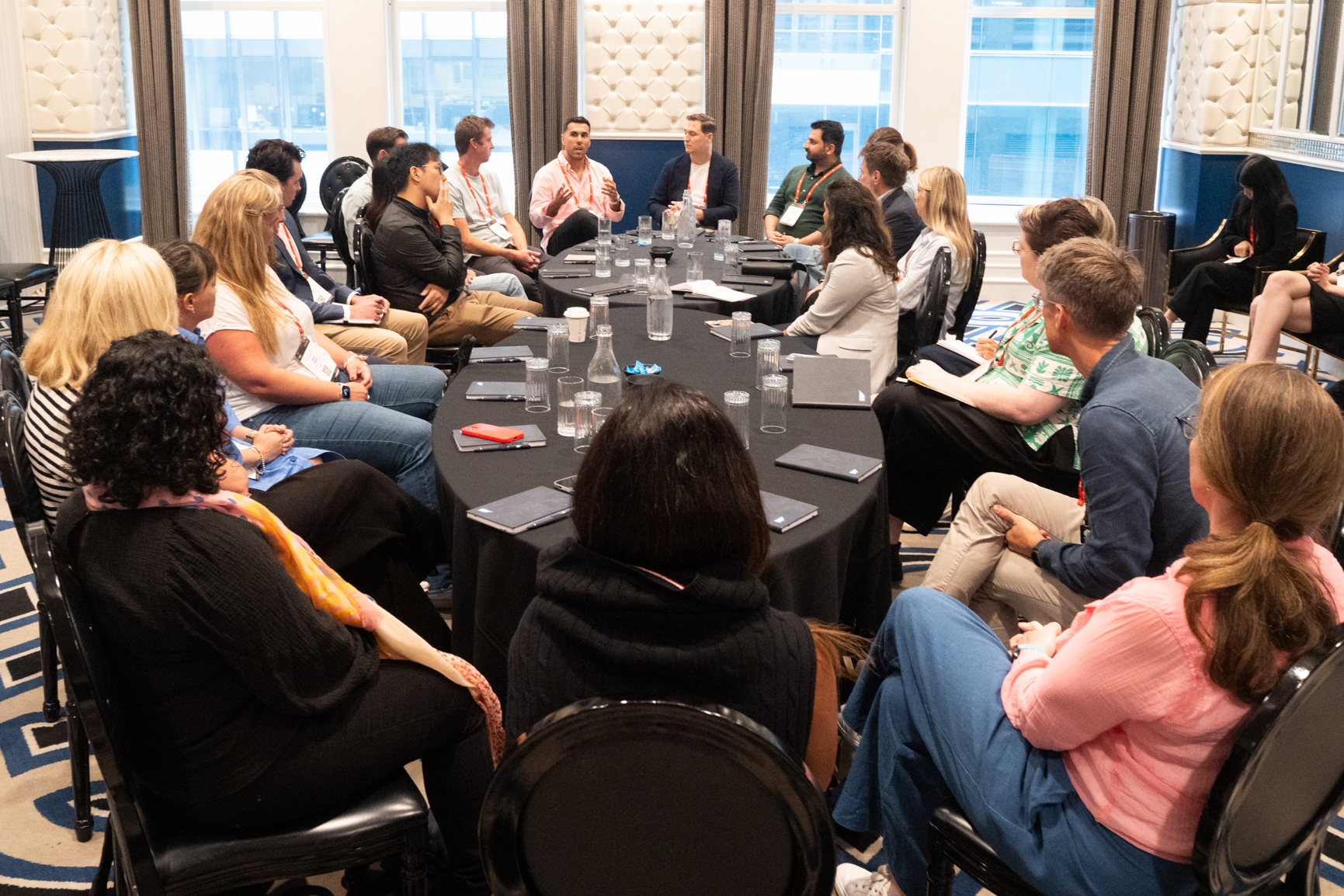
- Peer roundtables — small-group problem-solving with people in similar roles
- Live simulations — tackling real scenarios together
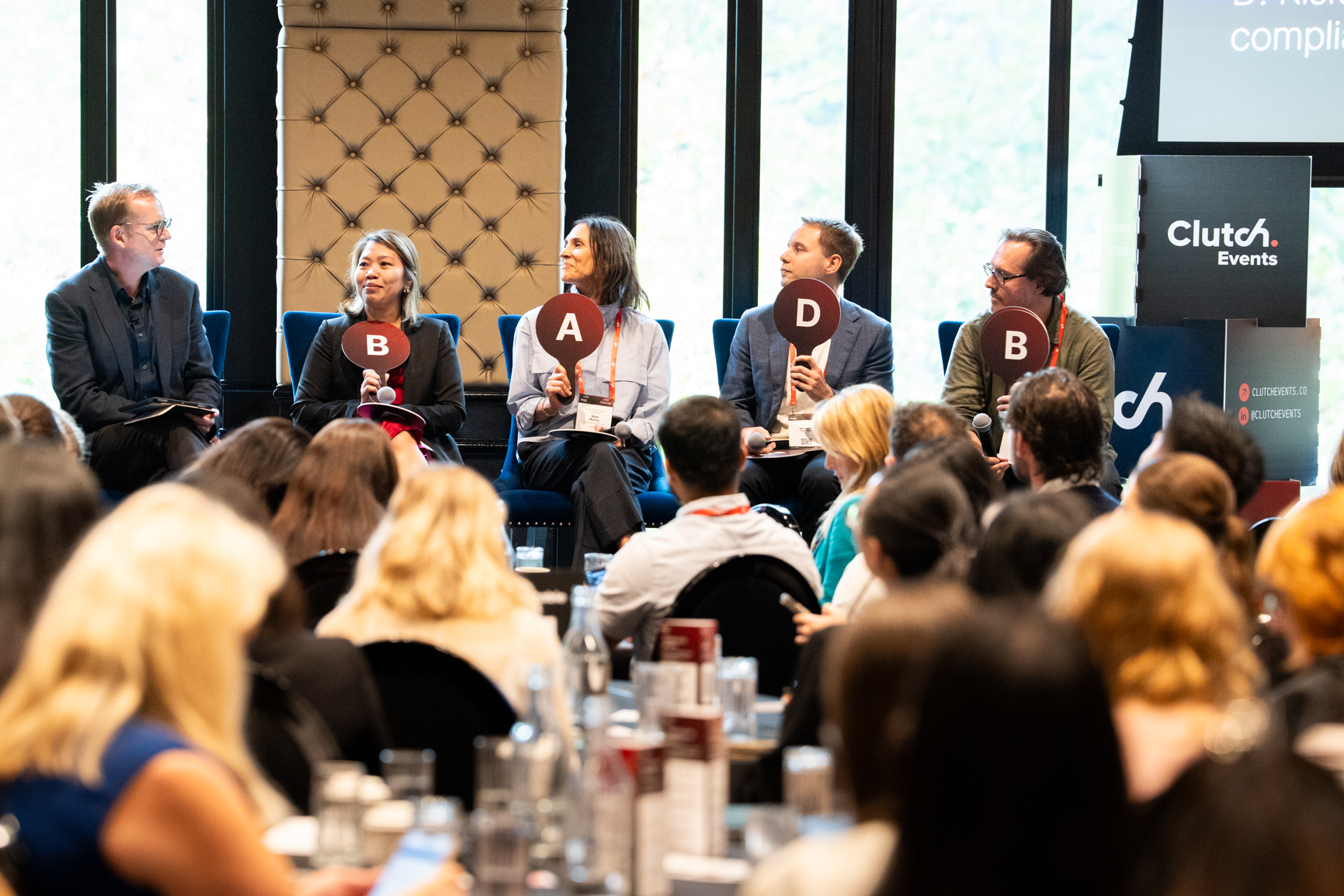
- Interactive panels — contribute your views live using your phone
- Structured networking — conversations that actually lead somewhere
- Optional one-to-one meetings — matched to your challenges
- Knowledge challenges and prizes — test your thinking against your peers
It’s an event with collaboration and participation at its heart, designed to give practical solutions to the challenges you face (and new people to connect with later).
Free-to-attend. No vendor pitching.
Our Speakers




















.jpg)







.png)









.png)

.png)



Agenda
Beat the rush and join us early for complimentary barista-made coffee and breakfast.
AI has shifted from assistants that make suggestions to autonomous agents that can read files, execute commands, call APIs, and modify systems on their own. That change expands the attack surface from prompt injection to full system compromise, lateral movement between agents, and persistent access through memory and tooling.
This session explores how autonomous agents are reshaping the threat model, what early adopters are discovering in practice, and the questions AppSec teams must confront as AI systems gain more autonomy and more potential for harm.
The speaker will cover:
- New risks from code-executing prompt injection to agent-to-agent lateral movement
- How teams are designing permissions, audit trails, sandboxing, and monitoring agent behavior
- Examples of agents being manipulated to exfiltrate data or modify configurations
- The security shifts required to safely deploy autonomous agents in the next year
Decommissioning is the most overlooked phase of the software development lifecycle, and one of the most persistent sources of hidden attack surface.Orphaned applications, APIs, and services often outlive their owners, leaving behind lingering credentials, exposed endpoints, and unclear ownership that attackers can exploit.Most AppSec programs focus on how systems are built and shipped, not how they are shut down.This session reframes decommissioning as a critical AppSec control, examining the real-world risks that emerge when systems are left behind and what teams are doing to address them in practice.The speaker will cover:
- Where decommissioning failures create hidden attack surface across applications, APIs, and services
- How orphaned systems, credentials, and endpoints persist without clear ownership
- Real-world attack paths that emerge from systems that were never properly shut down
- How teams are building decommissioning into the SDLC as a deliberate security control
Modern applications run on layered platforms, third-party extensions, and AI assisted development and tooling, each introducing dependencies that traditional supply chain controls struggle to track. Even with SBOMs and automated scanning, teams are seeing supply chain risk surface in production through transitive packages, platform abstractions, and components that weren’t visible at build time.
This panel explores how supply chain risks are actually surfacing in real environments and what effective control looks like when dependency sprawl is structural, not accidental.
We'll Cover
- Where SBOMs help in practice and where they still fall short
- How layered platforms, third-party extensions, and AI era tooling introduce new blind spots
- What transitive dependencies, dormant packages, and platform abstractions mean for real-world risk
- Practical approaches for regaining control without killing development velocity
The patch gap is where vulnerabilities are found faster than they’re fixed. Over the past few years, the industry has focused on improving detection and triage producing higher-quality findings and reducing noise. But even with better signal, most security teams still struggle to get issues resolved.
The problem isn’t finding vulnerabilities. It’s everything that happens after.
In large engineering organizations, remediation breaks down across ownership ambiguity, prioritization conflicts, and constant back-and-forth between security and engineering. The result is a growing backlog not because teams don’t know what to fix, but because they can’t coordinate the work at scale.
This session explores how we diagnosed the “last mile” problem in product security, and how we approached solving it by shifting from tracking work to executing it.
Shan will cover:
- Why improving triage didn’t improve security outcomes
- Where remediation actually breaks down in practice (GitHub, Jira, Slack)
- Why the patch gap is fundamentally a coordination problem
- How to scale vulnerability remediation without scaling headcount
- What changes when execution, not detection, becomes the focus
In this innovative session, attendees will be faced with a series of scenarios that they may face in their roles. Attendees will discuss the possible courses of action with their peers to consider the ramifications of each option before logging their own course of action.
Results will be tallied and analysed by our session facilitator and results will impact the way the group moves through the activity.
Will we collectively choose the right course of action?
AI is moving inside the software development lifecycle, not just assisting developers but actively writing code, running tests, and influencing what gets shipped. That shift raises new questions around control, trust, and accountability.This session walks through how HP introduced agentic systems into their SDLC, where they’ve seen real impact, and where things broke down.
The speaker will cover:
- Where agentic systems were introduced across the SDLC
- How control and validation were handled when AI started taking action
- What worked in practice and what didn’t
- What they would do differently if starting again
Secrets leakage is still one of the fastest ways for risk to reach production. Credentials can end up in code, CI pipelines, logs, containers, and deployment workflows, often as a byproduct of speed, tool sprawl, and inconsistent controls. But solving the problem is not as simple as adding more security gates. The real challenge is reducing exposure in a way developers will actually work with.
This session explores how organisations can tackle secrets leakage across the software lifecycle while keeping delivery moving.
Dwayne will cover:
- Where secrets are most often exposed across the SDLC
- How teams can reduce leakage without slowing engineering down
- What guardrails are most effective across development, pipelines, and production
- Where organisations usually get the balance wrong between control and velocity
Modern engineering teams move fast, and AppSec teams are constantly negotiating when to block, when to slow down, and when to accept risk to keep delivery on track. As exceptions, waivers, and temporary approvals become part of everyday workflows, many organizations struggle to understand what risks they’ve accepted, why they accepted them, and whether those decisions are still defensible months later.
This panel explores how high-performing teams balance speed with security, how they document and monitor accepted risk, and the frameworks that keep fast-moving environments accountable.
The panel will cover:
- How teams decide when risk acceptance is justified and when it isn’t
- Practical approaches to tracking exceptions, waivers, and approvals over time
- Techniques for documenting context so decisions remain defensible later
- How AppSec and engineering collaborate to keep velocity without losing control
Select a topic of discussion and engage in an interactive roundtable discussion with a group of your like-minded peers.
Put your knowledge to the test in this fast-paced quiz covering real-world trivia, key concepts, and emerging trends. Compete for bragging rights—and a travel voucher—as the top scorer takes the crown.
Application security is being reshaped faster than most teams can adapt. AI-generated code is increasing volume at a pace that challenges traditional review models. Software supply chain risk is no longer limited to dependencies, but extends into build pipelines and the tools writing the code itself. And as platform and engineering teams take on more responsibility, the boundaries that defined AppSec for the last decade are starting to blur.The question isn’t just how AppSec evolves from here. It’s whether parts of the current model can keep up at all. This panel brings together senior practitioners from leading AppSec Podcasts to take a clear look at where AppSec is heading over the next three to five years, what roles and practices are likely to change, and what leaders should be preparing for now.The panel will cover:
- How AI-generated code and coding agents may reshape AppSec, from review and testing to what “secure by default” looks like in practice
- Which parts of today’s AppSec model are likely to hold, and which may be replaced as ownership shifts across engineering and platform teams
- What the future of AppSec could look like, from tooling and workflows to the skills and responsibilities security leaders will need next
AI is changing how software gets written. Code is no longer produced line by line by a single developer. It is generated, refactored, and stitched together by AI tools at a speed traditional review processes were never designed to handle. Yet many AppSec programs are still relying on the same manual reviews, static rules, and approval gates built for a pre-AI era.
This keynote explores why secure code review is breaking down as AI becomes a core part of development, where existing practices create false confidence, and what needs to change to keep risk under control without slowing teams to a crawl.
The speaker will cover:
- Why AI-generated code shifts risk from individual lines to system-level behaviour
- Where traditional code review and SAST fail in high-velocity, AI-assisted pipelines
- How leading teams are redesigning review around intent, context, and ownership
- Practical ways to evolve secure code review for AI-native development in the next 12 months
Cybersecurity is often approached defensively but attackers don’t think defensively. They think creatively, opportunistically, and relentlessly. This keynote challenges leaders to shift their mindset from protecting systems to thinking like the adversary. Drawing on real-world breaches, attack timelines, and military cyber operations, the session reframes security as a discipline of anticipation, resilience, and continuous adaptation. Leaders will learn how to design systems that assume compromise, respond decisively, and ultimately survive and recover in a contested digital environment.
- Think like the adversary. Attackers exploit predictable weaknesses fast.
- Assume breach. Resilience matters more than perfect prevention.
- Protect what matters most. Prioritise critical data and rapid response.
AppSec teams sit at the center of fast-moving engineering organizations, yet there’s still no consensus on how they should be structured, what they should own, or how much authority they should have to slow things down.
This interactive session puts those debates on the screen literally. The audience votes live on five core questions covering team design, ownership boundaries, blocking power, developer experience, and how AI is reshaping the AppSec operating model. We explore the results, debate the trade-offs, then vote again to see if perspectives shift in real time.
This session will cover:
- How structure and ownership shape AppSec’s influence
- When blocking authority helps or harms engineering velocity
- How AI is forcing teams to rethink traditional operating models
- What leading organizations are learning about building developer-first AppSec
Unwind with your peers for a couple of drinks on us!
Attending Companies



.svg.png)



.png)





Attendee Testimonials

Session Highlights

Future of AppSec - Daniel Miessler's (Founder, Unsupervised Learning)
Vision for how AppSec should be structured, resourced, and operated inside organisations by 2027

Autonomous Agents in Production - Aaron Brown (Head of Security, Mercor)
Case study: Redesigning security models for agents with real system permissions.
Securing the agentic SDLC Vamsee Kandimalla (Director of AI Product Security, HP)
Case study: What broke when agentic systems started making delivery decisions.
Our event sponsors








Past Speaker Highlights
Past Sponsors

.webp)




.webp)

Event Location
Crowne Plaza Palo Alto

About Clutch
Hyper-Niche Content
Our conferences are specific to niche sub-sets of the technology industry, drilling down into the biggest issues, challenges and market trends facing tomorrow's leaders.
Collaboration first
Enjoy ample networking opportunities, roundtable discussions, interactive group sessions and real-world case-studies that arm attendees with actionable insights.
Dynamic & Bite-Size formats
No more death-by-PowerPoint. Our events are short, sharp and collaborative with a variety of session formats and a 3/4 day commitment to ensure returns on your time investment.
Get In Touch
Contact our event team for any enquiry

Danny Perry
For sponsorship opportunities.

Lili Munar
For guest and attendee enquiries.

Steph Tolmie
For speaking opportunities & content enquiries.

Taylor Stanyon
For event-related enquiries.